by Ralph
on January 13, 2010
Our vacation rental house was designed by a famous architect – Charles Moore. He is not a household name but he was the dean of the Architecture School at Yale when I was there and has a great cult following in California. He was one of the team of designers that put together the Sea Ranch development on the Pacific Ocean in Sonoma County where we spent Christmas. The house we stayed in was typical of the shed style which is encouraged at Sea Ranch. Originally, it was a small two bedroom house but later a master bedroom wing and a guest wing were added. The exterior, like all Sea Ranch structures is wood which is either stained gray or brown or left to weather naturally. Interiors are more varied but ours was mostly unfinished pine. One of the characteristics of a Moore design is a simple shape for the building but with a complex interior with many levels and diagonal intersections of the spaces with skylights to bring in light in expected and unexpected ways.
The house was quirky, particularly the interiors with an odd kitchen and an even odder master bath with an open shower and footed tub.
The beauty of Sea Ranch is the way that buildings are integrated into the landscape. This house is carefully shaped and fits nicely into the grove of cedars formed shaped by the winds off the Pacific. Other houses take the design cues but fail to fit the landscape. Even so, the soft colors and natural landscapes make Sea Ranch very restful. Despite the density of houses, the community still seems very much cued to nature and the beautiful surroundings.
{ }
by Ralph
on January 12, 2010
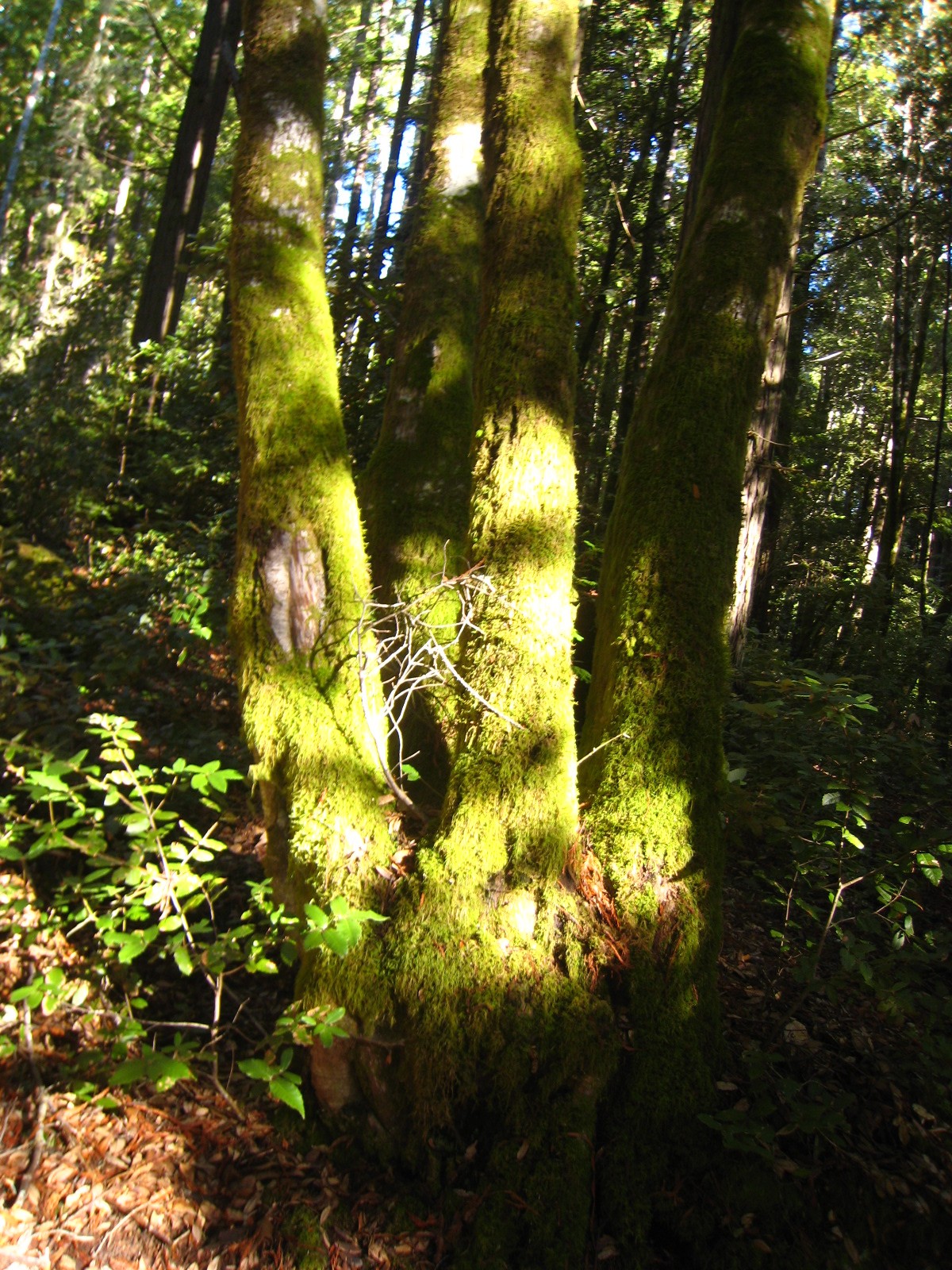
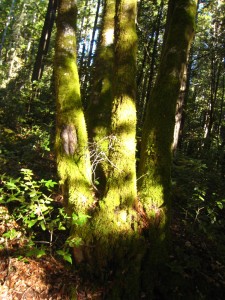 My second time out, I decided to head uphill into the redwood covered hills just across Highway 1. If my sticks were a nice addition to my coastal hike, they were absolutely essential on the slope. As soon as the path started rising, it was apparent that my nimble, mountain goat years were history. I definitely needed the two extra points of stability as I climbed. It was also soon apparent that without the assistance of my arms as I climbed, it would have been necessary to turn around. I was very pleased with my new poles as they pulled and steadied me on the trail. Several times, I know I would have fallen and possibly injured myself without my new tools. And that was just going up the hill. As I started down, I realized how dependent I was on the sticks. Between the slippery mud of the trail and the steep and irregular incline, I know that I would have been reduced to sliding down the trail on my ass or falling. With the sticks I maintained stability and balance going down.
The lesson here is that I was seeking a tool when I asked for a walking stick but I completely underestimated the value of that tool. I had a vision and expectation which was limited to my experience (seeing someone carrying one) but I had no real idea of how useful they would be or the way that they would be useful or even invaluable. I thought that the sticks were an optional help when they were actually a necessary resource.
Too often, I assume that I have complete knowledge when I actually know very little and I discount outside resources as superfluous. I thought that walking sticks were something nice to have but not essential as perhaps they are for a twenty-something and that I am impervious to the physical limitations of aging. I was wrong- very wrong. This time I was lucky enough to discover how wrong I was. Now I wonder how many other ways I have kept myself from discovering valuable tools and limiting my possibilities as a result.
I don’t know if this is something that you may have experienced but if you have, please share what you learned and how you found a new and invaluable tool or what ways you keep yourself open to new ideas that challenge your image of yourself. I don’t want to miss anything that helps me be a stronger and more active person.
{ }

Recent Comments