The 1953 Studebaker cars were perhaps the most beautiful American cars ever made. They were underpowered and technically deficient to the cars from the big three but even if you wouldn’t consider buying a Studebaker, you always knew what they looked like. The post-war Studebakers were known as the cars that looked the same from the front and the rear. They didn’t look exactly alike because you could always tell a taillight from a headlight and the front end had the air vent but you could imagine the fun the designer must have had making the front and rear as much alike as possible. Now that I pull photos of a 1950 Studebaker, it is interesting to note that the front and back aren’t as similar as everybody used to say.
1953 was the year for Studebaker
Back to 1953, the restyled cars were a sensation, outflanking the stodgier Fords and Chevies but sales took a hit after the boost in 1953. My guess is that the looks were not enough to overcome the lack of power and finish of the Ford and GM competition. Studebaker was troubled, as were all the smaller car companies. They packed together hoping to build enough market share to compete. Studebaker merged with Packard but despite some good ideas and new styling ideas in the 60’s, Studebaker is now just a part of the US auto history.
This video gives you a closer look at a prize winning 1953 Studebaker coupe in perfect condition.
There is more than one form of excusitis. The more commonly discussed form makes excuses for not taking action. You use the excuse as the reason for not acting. Examples are that you are too old, too young, etc to do some thing. The other form of excusitis is just as insidious. This form of escusitis uses an excuse to justify an action that you should not have done. An example is the ‘so called’ constructive criticism. We let go and tell someone what we believe is the unvarnished truth about themselves because it is good for them. Another variation of this excusitis is when we say “I meant well” or “It is for their own good.” after destroying somebody’s dream or confidence. It is OK to say bad things to someone so long as it is for their own good.
When you grow up with excusitis, it seems normal
I grew up with that kind of home environment and I bought the story. I accepted that it was OK for my family to make fun of and belittle me and others because they were just kidding. It was right for them to tell me that my dreams were foolish because it saved me from failure. The consequences of this behavior is bad enough when it affects the lives and accomplishments of others but there is an even worse effect when you grow up in that environment – you build it into your life.
You think you are normal
I didn’t recognize how I excused my behaviors growing up or wonder why I never formed lasting relationships. It was only when I married that I began to learn that I was a nasty critical person who was either ‘just kidding’ or telling people what they needed to know for their ‘own good.’ My wife wouldn’t accept that behavior and ultimately I was forced to choose between my wife and excusitis. Happily, I had enough sense to know what was important. It hasn’t been easy and criticism is still my first response. I just have to recognize and control those instinctive and defensive responses and bite my tongue.
Learning the truth
I consider myself lucky that my wife was willing to straighten me out. She would not tolerate my behavior directed towards her and she patiently showed me when I was doing it to others. All this was necessary because it was so ingrained in my behavior that I never recognized it for what it was. I had all my excuses ready to prove that I was a good guy.
I am a recovering excusitis sufferer
It is a continuing struggle. Now I am better able to recognize excusitis as it continues to happen. When I recognize it in myself, even after the fact, it gives me a little better sense of the situations where it is my natural response. I can then better manage those responses. How do I recognize my escusitis? It isn’t hard if I ask myself ‘Why?’ when anything critical comes out of my mouth. If the answer is any kind of justification of myself then I know that I should never have said it. A greater truth that I gradually recognized is that criticism is terrible for everybody. What I am really discovering is that criticism benefits nobody so it is better just not to criticize at all.
Related articles by Zemanta
Get the facts before you rant, or: ENDA will not exterminate trans women (pinkbananaworld.com)


 Edginess was a Studebaker tradition
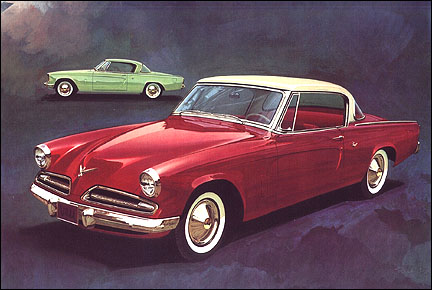 , outflanking the stodgier Fords and Chevies but sales took a hit after the boost in 1953. My guess is that the looks were not enough to overcome the lack of power and finish of the Ford and GM competition. Studebaker was troubled, as were all the smaller car companies. They packed together hoping to build enough market share to compete. Studebaker merged with Packard but despite some good ideas and new styling ideas in the 60’s, Studebaker is now just a part of the US auto history.
Recent Comments